Every other temple sits at its true compass bearing, but is drawn at the square root of its real distance so nearby neighbours don't collapse into one point; the range rings carry the actual kilometres.
The figures, symbols and buildings recorded at this temple, grouped by what they are rather than where they stand, linked back to the glossary wherever a card already explains them.
Figures1
Buddha image
Symbols1
Chofa, roof finial
Buildings2
Ordination hall
Stupa
Overview
Wat Khiri Mat (วัดคีรีมาศ), often spelled Wat Keeree Mas, is a serene and authentic hilltop sanctuary nestled in the quiet village of Taling Ngam on Koh Samui’s western coast. While the northern temples are swamped with tour groups, Wat Khiri Mat remains a “quiet temple,” offering a genuine glimpse into the spiritual life of the island’s traditional farming and fishing communities. Its name, which translates to “Mountain of Gold,” reflects both its elevated position and its profound value to the local people.
Perched atop a small, lushly forested hill, the temple serves as a peaceful vantage point overlooking the vast coconut plantations and the calm waters of the western shore. With its vibrant architecture, unique glass-enclosed Buddha image, and deep integration with the local village life, Wat Khiri Mat is one of the island’s most rewarding hidden gems. It is a place where the noise of modern tourism fades away, replaced by the sound of temple bells and the laughter of school children from the adjacent grounds.
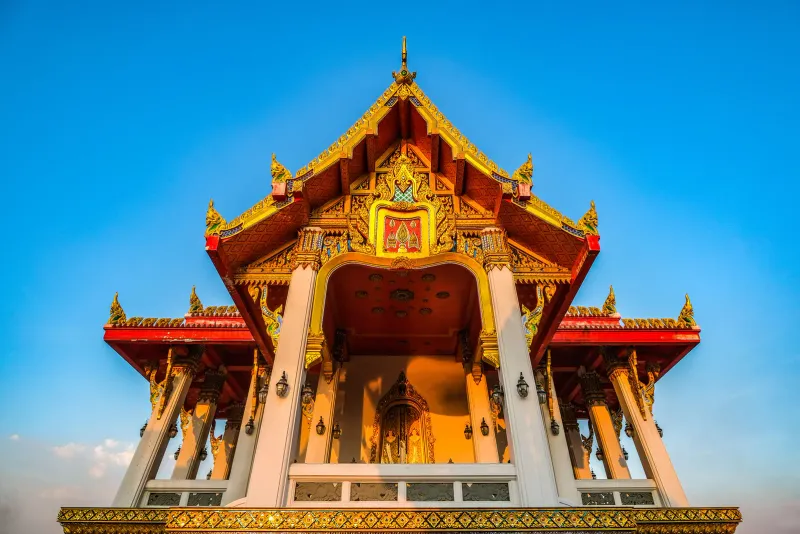
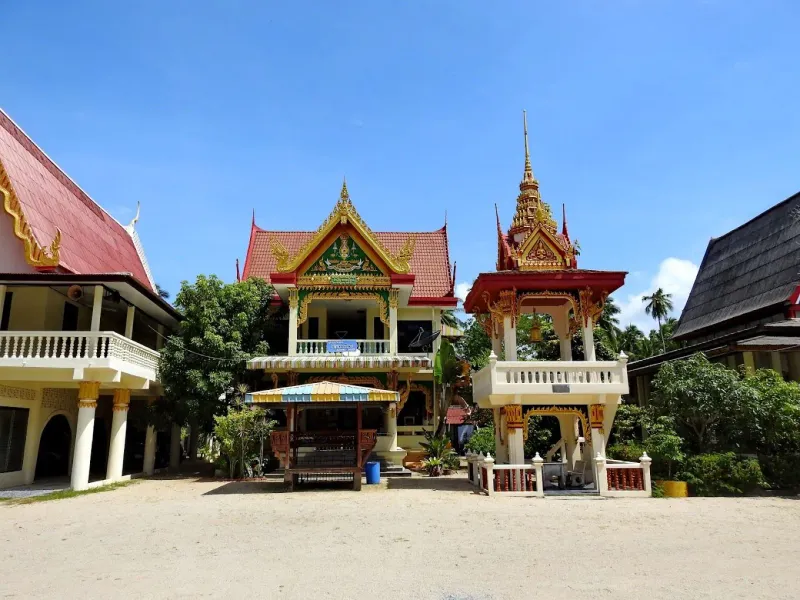
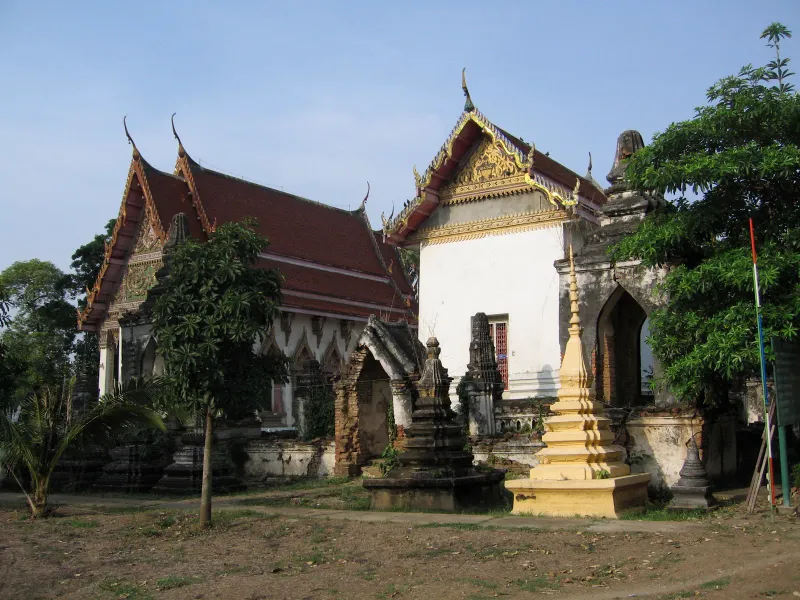
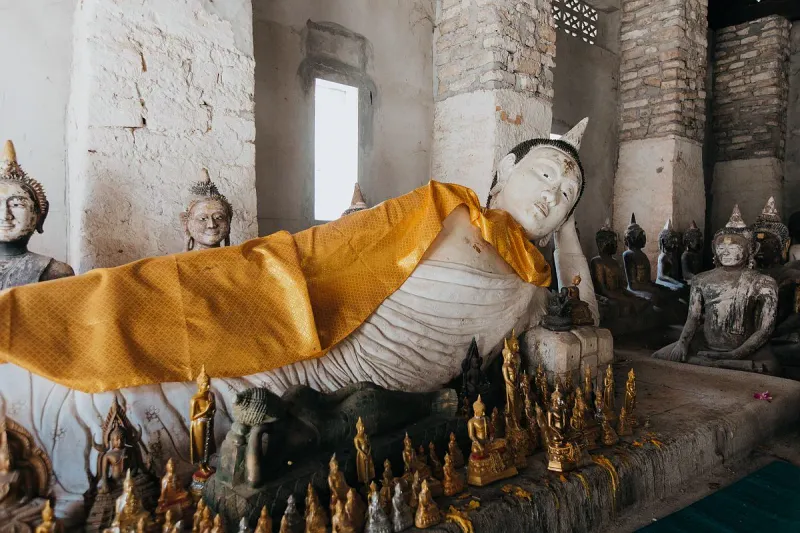
A gilded temple gable in the Thai style: illustrative of the roofline Wat Khiri Mat carries on its hilltop.
History: The Mountain of Gold
Wat Khiri Mat has been the spiritual and social anchor of Taling Ngam for decades. Established long before Samui became a tourism destination, the temple was built by local families who wanted a sacred space that was closer to the heavens.
The name “Mountain of Gold” refers to the spiritual wealth that the monks bring to the community. Historically, the temple was not just a place of prayer, but also a center for education and traditional healing. This connection to the people remains strong today, as evidenced by the Rongrian Wat Khiri Mat (temple school) located right on the complex grounds.
A Sanctuary Above the Canopy
The primary draw of Wat Khiri Mat is its spectacular hilltop setting.
Elevation: Built on a gentle rise, the temple offers a constant sea breeze and a significantly cooler temperature than the humid coastline.
The Approach: The journey to the temple begins at a striking blue-and-yellow archway at the base of the hill. The road winds upward through dense tropical foliage, creating a sense of transition from the mundane to the sacred.
The Views: From the main terrace, you can look out across the “Virgin Coast” of Samui. While the view isn’t as expansive as Khao Hua Jook in the north, it is far more intimate, showing the lush agricultural heart of the island.
The Ornate Pagoda and Glass Shrine
The spiritual focus of the temple is the large Chedi (Pagoda) located directly in front of the main ordination hall.
Glass-Enclosed Buddha
Inside the lower section of the pagoda, there is a beautiful Buddha statue housed entirely within a protective glass case. This unique display is highly revered by locals, who often leave offerings of fresh jasmine and lotus flowers at its base. The glass reflects the tropical sunlight, giving the Buddha a luminous quality that is especially powerful during the morning hours.
Decorative Architecture
The buildings feature classic southern Thai temple aesthetics: multi-tiered roofs with steeply pitched gables, decorated with elaborate chofah (bird-like finials) and hand-carved wood panels. The use of vibrant primary colors makes the buildings pop against the deep green of the surrounding jungle.
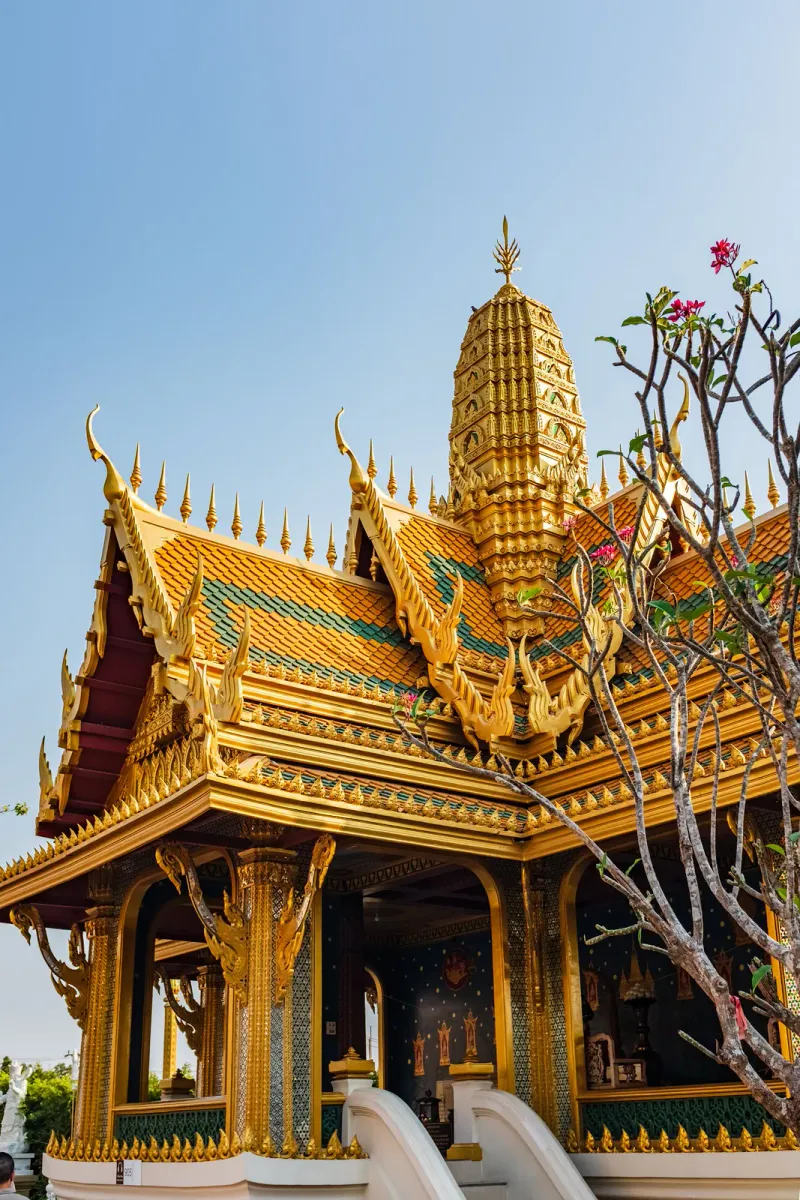
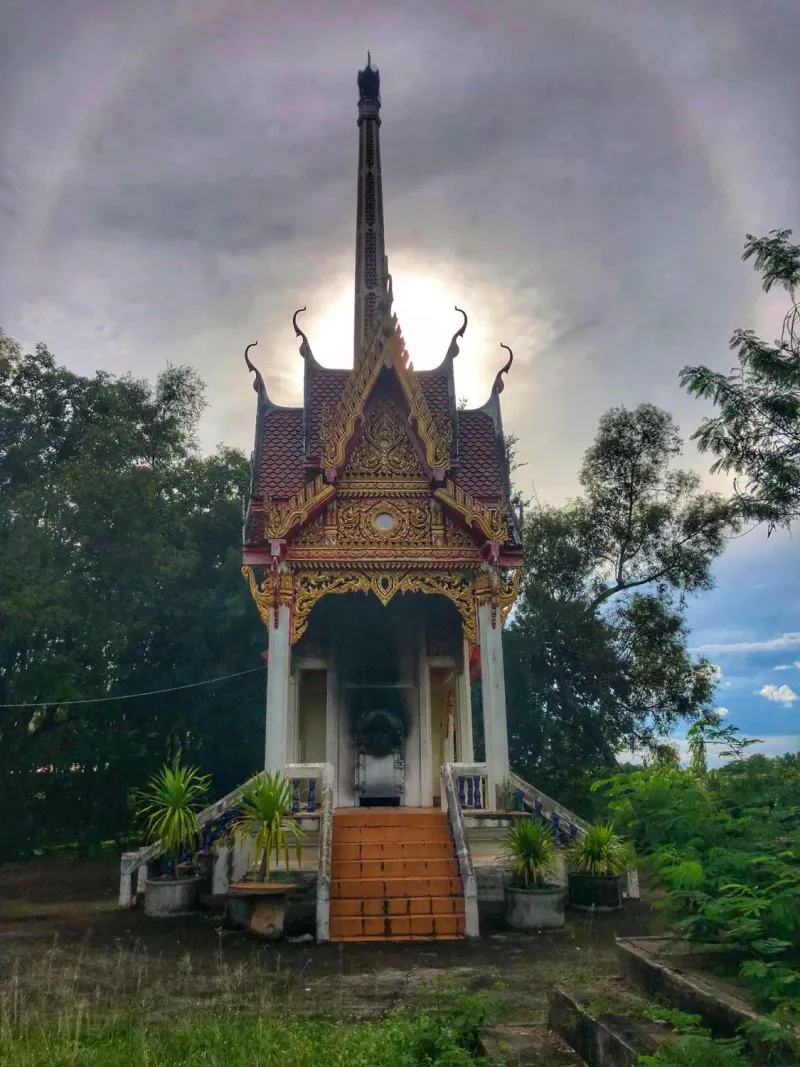
A golden chedi spire in the classic Thai style, the kind of pagoda architecture Wat Khiri Mat's hilltop is known for.
A Living Village Temple
Wat Khiri Mat is an active community hub. During your visit, you are likely to see monks going about their daily chores, novice monks studying, and local villagers coming to make merit.
The presence of the primary school on the grounds adds a lively, youthful energy to the site. This integration of faith and education is a hallmark of traditional Thai life, where the temple remains the center of all major milestones: from the first day of school to the local village fairs.
Activities: Meditation and Quiet Views
Silent Reflection: Because the temple receives very few tourists, it is an ideal spot for informal meditation. The shaded benches around the stupa offer absolute quiet.
Photography: The high-contrast architecture and the unique glass-enclosed Buddha are fantastic subjects for travel photography.
Observe Local Life: Spend 15 minutes watching the community interactions at the temple school or watching the monks perform their daily chants if you visit in the early morning.
Where to Eat: Taling Ngam Shophouses
Taling Ngam is famous for its slow pace and authentic local food. There are several small eateries near the temple entrance and along the coastal road.
Restaurant
Style
Recommendation
Distance
Local Duck Rice
Traditional
Roasted Duck
2 min drive
Cool Bar
Relaxed Beachfront
Fresh Coconuts
8 min drive
Think & Retro
Beachfront / Funky
Thai Fusion
10 min drive
I-Talay
Fine Dining
Sunset Seafood
6 min drive
Nearby Attractions
Wat Khiri Mat is part of a cluster of high-quality, quiet sites:
Wat Kiri Wongkaram (5 min drive): Visit for the mummified monk who wears no sunglasses.
Phang Ka Beach (10 min drive): A secluded bay perfect for watching the local longtail boats.
Taling Ngam Beach: The island’s premier location for sunset photography.
Five Islands Viewpoint: A nearby restaurant area with iconic views of the limestone karsts.
Getting There: The Hill Road to Khiri Mat
Wat Khiri Mat is located in Moo 4, Taling Ngam, on the southwestern coast of the island.
By Motorbike: This is the best way to reach the site. From Nathon, follow the Ring Road south and turn toward Taling Ngam. Look for the signs for “Keeree-Mas Road” and the blue-and-yellow archway.
By Car: The road to the hilltop is paved and wide enough for cars, but park respectfully near the school area.
By Songthaew: You can take a songthaew from Nathon toward the south, but you will need to walk about 1 kilometer from the main road junction.
Best Time to Visit
Time
Experience
Rating
8:00 AM - 10:00 AM
Cool air; best for outdoor photography; school starting.
Respect the School: Since the temple shares grounds with a school, be extra mindful of your noise level and avoid interrupting classroom activities.
Modest Attire: This is a conservative village temple. Please cover your shoulders and knees.
Remove Shoes: Always take your shoes off before entering the ordination hall or the prayer area of the pagoda.
Small Donations: Look for the donation boxes. Your contributions go directly to the upkeep of the temple and the support of the local school.
Check the Brakes: The hill is not long, but it is steep. Ensure your bike is in good condition.
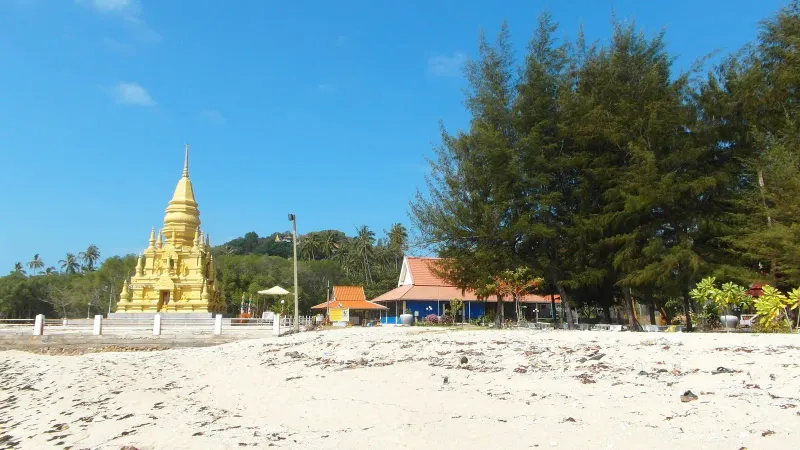
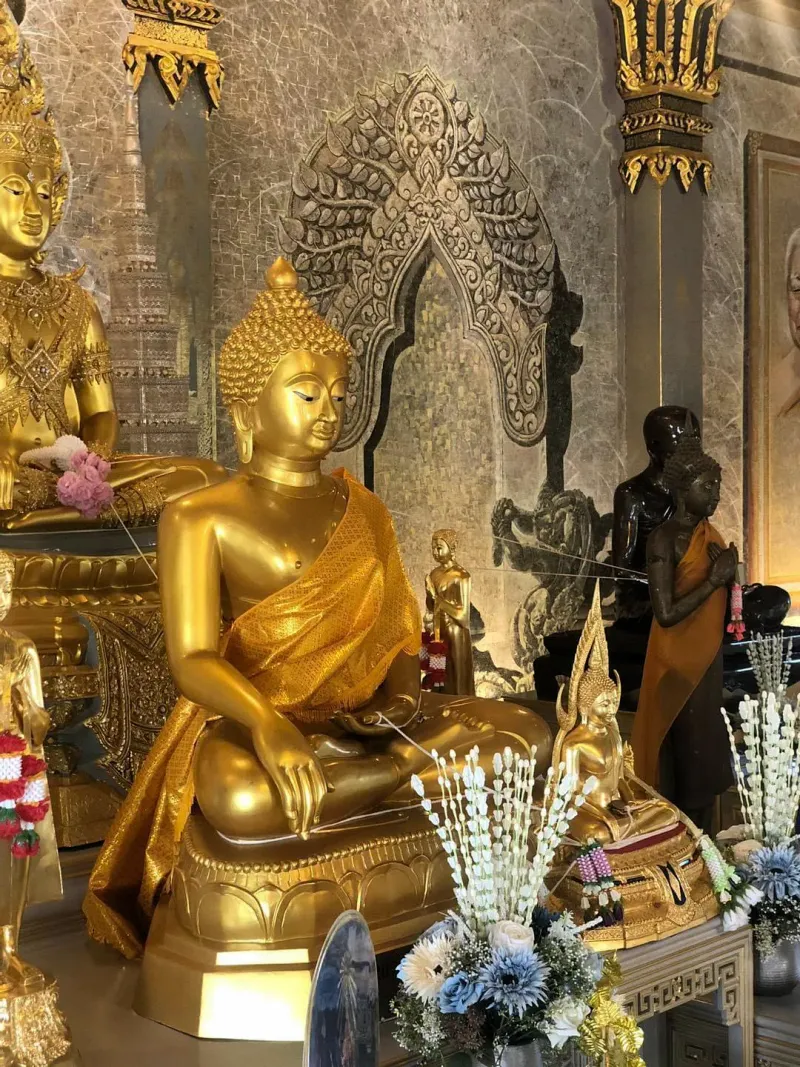
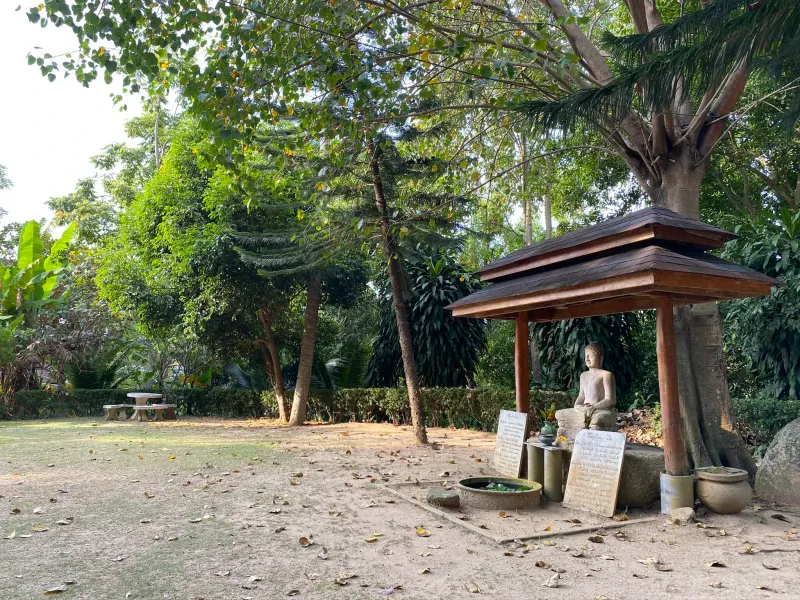
Generic Thai temple imagery on Koh Samui, in keeping with Wat Khiri Mat's own hilltop pagoda.
Who Is Wat Khiri Mat Best For?
Traveler Type
Rating
Why?
Slow Travelers
★★★★★
A perfect place to escape the “tourist traps” and experience peace.
Culture Seekers
★★★★★
Authentic architecture and deep community integration.
Photographers
★★★★
Unique hilltop perspective and vibrant stupas.
Introverts
★★★★★
One of the least-visited temples on the island.
FAQ
What does “Khiri Mat” mean?
The name means “Mountain of Gold.” “Khiri” (or Keeree) means mountain, and “Mat” (or Mas) refers to gold. It symbolizes the spiritual value the temple provides to the local community.
Is Wat Khiri Mat the same as Wat Kiri Wongkaram?
No, they are two different temples, though they are located in the same general Taling Ngam area (about 5 minutes drive apart). Wat Kiri Wongkaram is famous for its mummified monk, while Wat Khiri Mat is known for its hilltop location and glass-enclosed Buddha.
Is there an entrance fee?
No, visiting the temple is free. Small donations are encouraged to help maintain the site and support the local school.
How long should I spend there?
Most visitors spend about 20 to 30 minutes exploring the grounds and enjoying the quiet views.
Is it accessible for the elderly?
The hill is steep, but the road is paved. Those with limited mobility can be driven directly to the temple terrace, avoiding most of the climb.
Travel photographer and island explorer. Mike has spent years documenting Southeast Asia's hidden gems, from secluded beaches to jungle waterfalls.
When to go
The temple calendar
Which day to come
Every day of the week carries its own Buddha posture, and this temple's own festival dates are set out beside it, or the general holy-day rule where it keeps none of its own.
SundayStanding in contemplation
MondayCalming the ocean
TuesdayReclining
WednesdayHolding the alms bowl
Wednesday nightRetreat into the forest
ThursdaySeated in meditation
FridayHands crossed at the chestToday
SaturdayShielded by the naga
Festivals here
No festival of its own
Wan Phra
Wan Phra, the Buddhist holy day, falls on the new moon, the first-quarter moon, the full moon and the last-quarter moon, roughly every seven to eight days, never on a fixed weekday.
Only the etiquette that applies at this temple, drawn from the island's general rules and narrowed to match its own shoes, dress, fee and quiet requirements.
Cover shoulders and knees
Shoulders and knees stay covered inside every temple, no matter how hot the day, for women and men alike.
Take off your shoes
Shoes and sandals come off before stepping into any hall with a Buddha image, no exceptions.
Mind your feet
Never point your feet at a Buddha image or a monk; tuck them behind you if you sit on the floor.
Nothing above the Buddha
Never touch a monk's head, and don't reach for anything above a seated Buddha image either.
Women and monks
Women never touch a monk or hand him anything directly; use a cloth or set the item down instead.
Ask before photographing
Ask before photographing a monk up close, and skip the flash and the selfie stick inside a prayer hall.
Keep your voice down
Keep your voice low and your phone silent inside any hall where people are praying or meditating.
Nearby Places
Just past the gate
What's within reach
The nearest beach, temple, waterfall and trail from this gate, each with its real distance and true direction, for whatever comes after this stop.