Every other temple sits at its true compass bearing, but is drawn at the square root of its real distance so nearby neighbours don't collapse into one point; the range rings carry the actual kilometres.
The figures, symbols and buildings recorded at this temple, grouped by what they are rather than where they stand, linked back to the glossary wherever a card already explains them.
Figures2
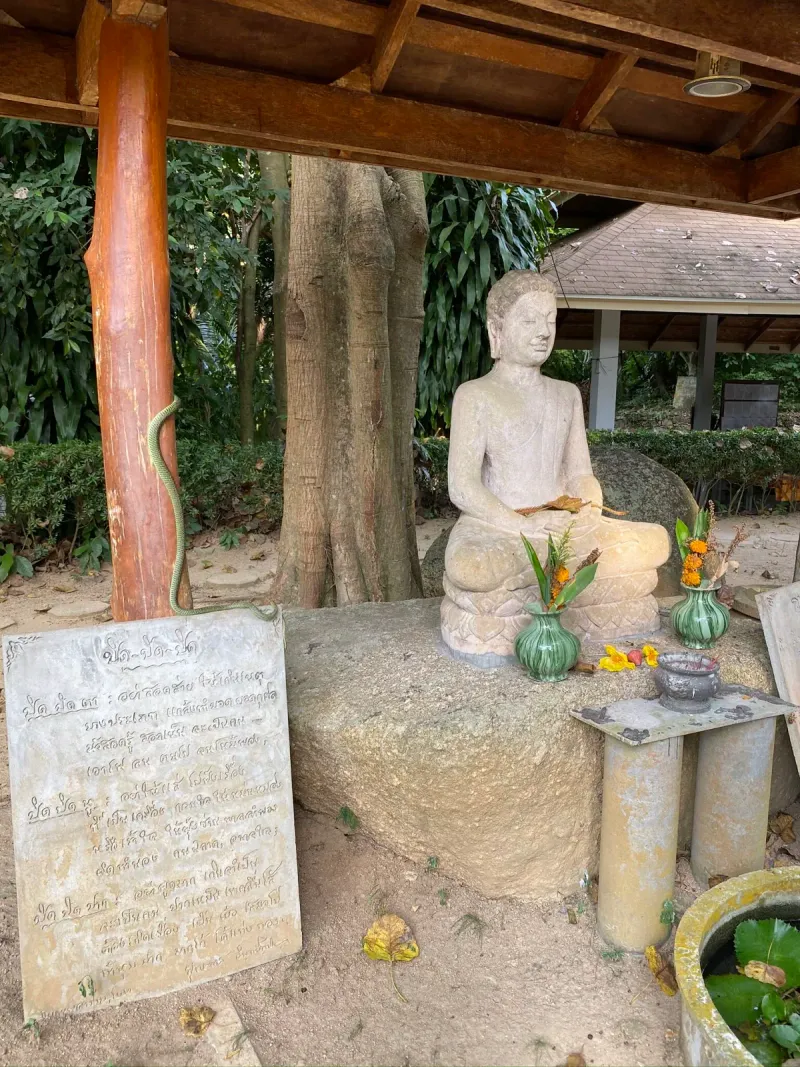
Monk statue
Buddha image
Overview
Dipabhavan Meditation Center (ธรรมสถานทีปภาวัน) is a donation-based Buddhist hermitage on a hillside in Koh Samui’s south-east that runs free silent Vipassana retreats every month: a 3-day course on the 8th-10th, and 8-day courses on the 11th-18th and 20th-27th. There is no fee. Its name means “Development of Light Hermitage”.
Eight days of Noble Silence on a hillside above the Gulf of Thailand cost nothing but a donation at the end. Unlike Samui’s wellness resorts, it follows the forest tradition of Ajahn Buddhadasa: simple rooms, vegetarian food, no phones and a strict daily timetable. Beginners are welcome on the 3-day course and the first 8-day course.
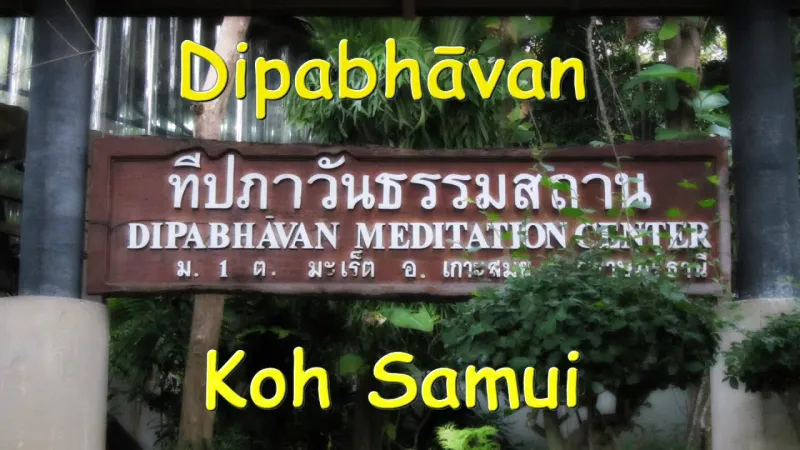
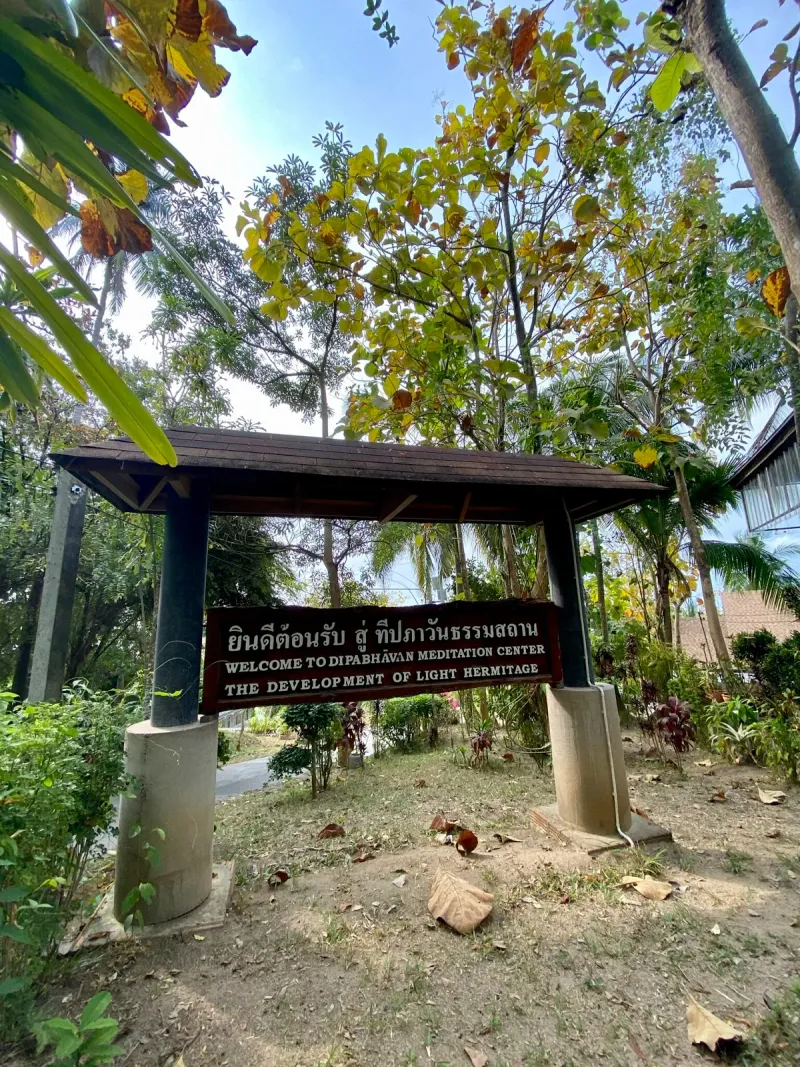
The entrance sign at Dipabhavan, set among the trees of the hermitage grounds.The secluded mountain setting of Dipabhavan offers a quiet backdrop for inner reflection.
Retreat Dates and Registration
Dipabhavan runs three fixed courses each month. Registration happens in person on the first day, and you book beforehand through the official Dipabhavan website, using its booking form.
Course
Dates each month
Length
Who it suits
3-day
8th-10th
3 days
First-timers; minimum age 16
Course 1
11th-18th
8 days
All levels
Course 2
20th-27th
8 days
Experienced meditators, longer sits
The 2026 schedule on the official site lists, for example, 11-18 October, 20-27 October, 8-10 November, 11-18 November and 20-27 November, with the same pattern in December. Dates can change, so check the site before travelling. Some blogs call the 8-day course a “7-day retreat”: the 8 days are the arrival day plus seven days of practice.
History: The Development of Light
Dipabhavan was established in 2005 by Ajahn Poh, abbot of Suan Mokkh, the well-known mainland monastery founded by Ajahn Buddhadasa. It follows the lineage of Ajahn Buddhadasa Bhikkhu, one of Thailand’s most influential 20th-century monks, who stressed a back-to-basics approach to the Buddha’s teaching. The centre was set up so that Thais and foreigners could study the Dhamma in a non-commercial setting.
The Hermitage: Back-to-Basics Simplicity
A retreat here is an exercise in detachment. The centre gives you what you need for practice and little else.
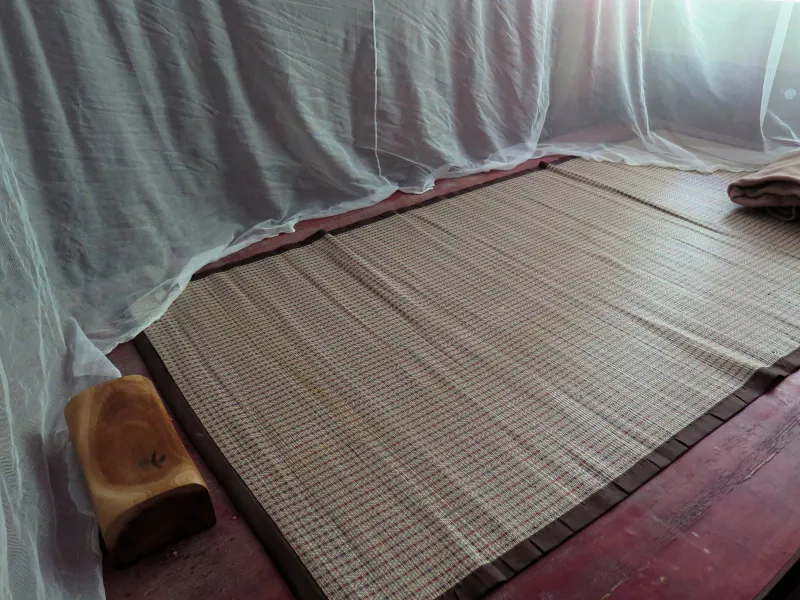
Accommodation: Small, simple, non-air-conditioned rooms with a wooden bed, in separate buildings for men and women, with shared washing facilities (the official description; some older accounts mention dormitories). Reviews mention that beds are firm and rooms basic.
Showers: Cool mountain water in simple Thai-style facilities.
The Food: Two vegetarian meals a day plus evening tea and banana. No meat, fish or coffee.
Digital detox: Phones, tablets, cameras and music players are handed in on arrival.
The Retreat Experience: Noble Silence
The core of the experience is Noble Silence: no talking, no notes passed, no eye contact or gestures with other participants for the length of the course. The exceptions are scheduled interviews with the teachers, where you can ask about your practice.
Most students find the first two days the hardest, after which the silence becomes a relief from social pressure. Be honest with yourself about the trade-offs: a hard bed, early starts and long sits make it demanding, and one Tripadvisor reviewer titled their review “skip this retreat”. Many others rate it highly, so read several recent reviews before you commit.
The Practice: A Day in the Life
Past participants describe a tightly structured day, with about 6.5 hours of meditation, Dhamma talks, a 4:30 wake-up and a 9:00 bedtime. Exact times shift between courses.
Time
Activity
4:30 AM
Wake-up bell
5:00 AM
Morning reading and sitting meditation
6:30 AM
Yoga or mindful exercise
7:30 AM
Breakfast and mindful chores
9:30 AM
Dhamma talk
10:30 AM
Walking and sitting meditation
11:30 AM
Lunch (the last meal of the day)
2:30 PM
Sitting and walking meditation
5:00 PM
Chanting and loving-kindness meditation
6:30 PM
Tea time
9:00 PM
Rest
Meditation Techniques: Breath and Insight
Dipabhavan teaches two linked techniques:
Anapanasati (mindfulness of breathing): The foundation. Following the breath settles the nervous system and quietens the “monkey mind”.
Vipassana (insight meditation): Once the mind is calm, students observe thoughts, feelings and sensations without judgement, which leads to insight into the nature of suffering.
Visitor Guide: How to Join
Joining requires preparation and commitment.
Booking: Register in advance through the official Dipabhavan website. The course is free, so places depend on capacity rather than payment.
Meeting point: Participants report first to the Dipabhavan Foundation office near the main road and Wat Sila Ngu (the Red Temple) in Hua Thanon, on the registration day: the 8th, 11th or 20th.
Transport: The centre runs a free truck up the steep mountain road to the hermitage.
What to bring: Modest clothing that covers arms and legs (white is traditional but not required), toiletries, a towel, mosquito repellent and a flashlight.
Age: The official page says no one under 16 is accepted on the 3-day course. Check the site for the 8-day courses.
Other Vipassana and Meditation Options on Koh Samui
Dipabhavan is the main Vipassana retreat on Samui, but not the only way to meditate. Samui Meditation Center offers a free evening session without booking. For multi-week retreats and other centres, the meditation retreats guide compares the options, and the mainland Suan Mokkh also requires registration in advance. If you prefer yoga alongside meditation, see yoga and wellness retreats.
Where to Eat: Before and After
You eat very simply during the course, so a proper meal before or after is worth planning.
Hin Ta Hin Yai: the famous rock formations, a short drive north.
Best Time to Visit
Courses run every month of the year, so the season is about comfort rather than availability.
Season
Experience
Notes
Dry season (Jan-Apr)
Clear skies, cooler nights, best views.
The usual peak: register early.
Hot season (May-Aug)
Humid, with a lush green jungle.
Good if you tolerate heat.
Rainy season (Oct-Dec)
Mist and rain sounds.
Very wet; paths can be slippery.
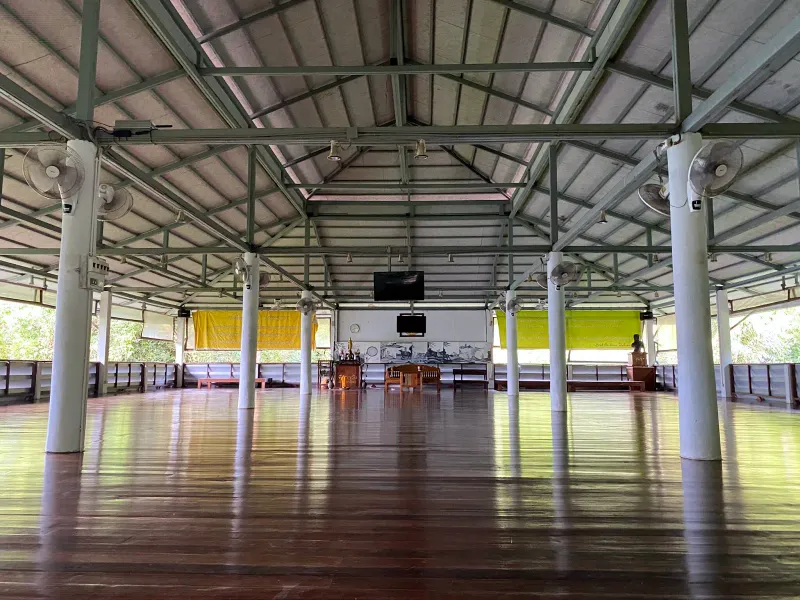
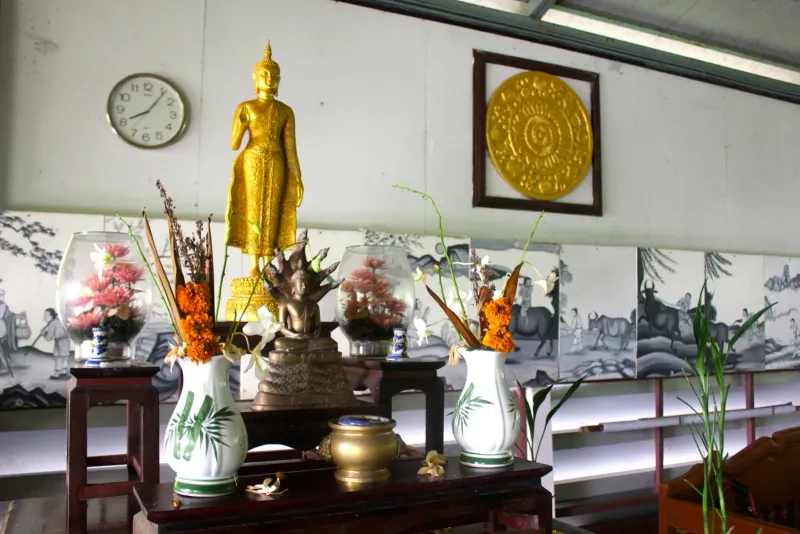
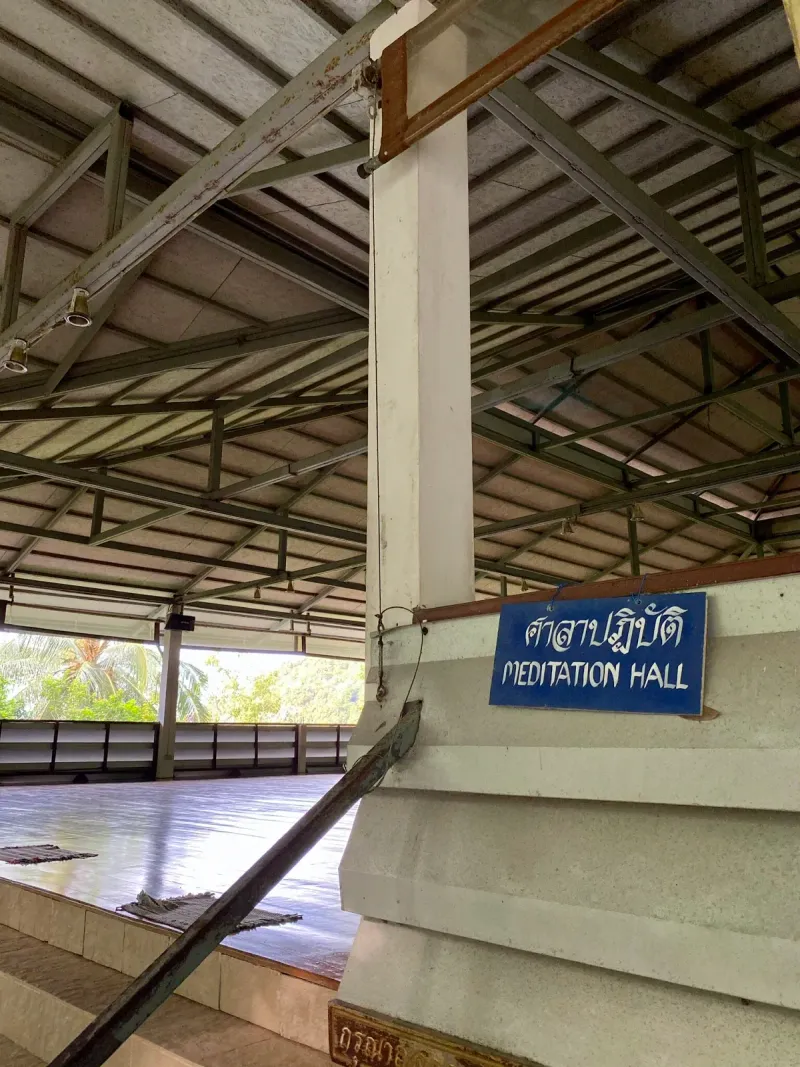
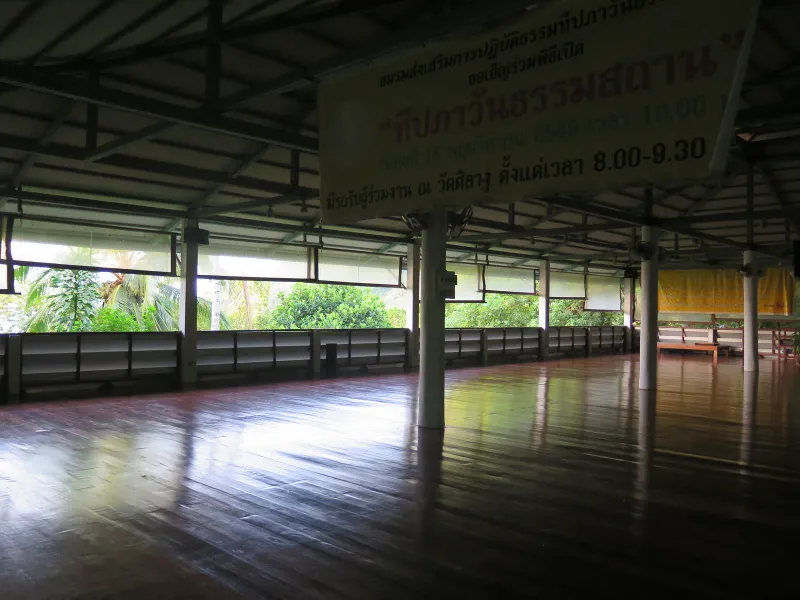
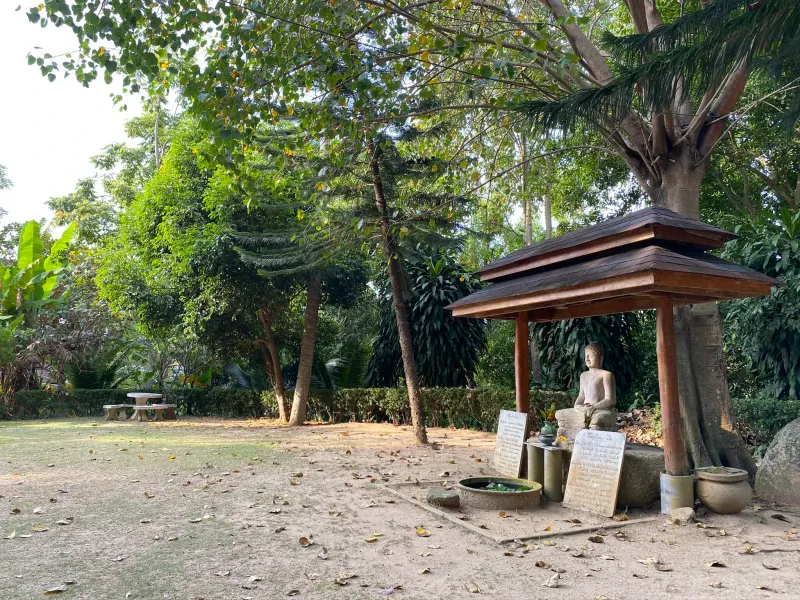
Scenes from the Dipabhavan hermitage grounds: the meditation hall, altar and garden shrines.
Who Is Dipabhavan Best For?
Traveler Type
Rating
Why?
Spirit Seekers
★★★★★
An intensive, free retreat in the Buddhadasa tradition.
Budget Travelers
★★★★★
Free of charge, with donations at the end.
Digital Nomads
★★★★
A full unplug from screens, if you can commit the days.
Luxury Seekers
★
An ascetic experience, not a comfort stay.
FAQ
Is Dipabhavan really free?
Yes. In the Buddhist tradition of Dana (generosity), teaching, food and lodging are offered free of charge, and the centre relies on donations. Most participants leave a donation at the end of the course according to what they can afford. There is no set price and no payment to register.
When are the retreats at Dipabhavan?
Dipabhavan runs a 3-day course on the 8th-10th of each month, Course 1 on the 11th-18th and Course 2 on the 20th-27th. The official schedule lists the 2026 dates, including 11-18 October. Check the website before travelling, as dates can change.
I have never meditated before. Can I join?
Yes. Dipabhavan says no prior experience is needed. The 3-day course and Course 1 (11th-18th, all levels) suit beginners, while Course 2 (20th-27th) is aimed at experienced meditators and uses longer sitting periods.
Can I leave the retreat early?
The centre asks for a firm commitment to stay for the full course. Leaving early disrupts the group and prevents you from getting the full benefit, so plan your trip around the complete dates before registering.
Do I have to be Buddhist?
No. People of any faith or none are welcome. You are asked to follow the Five Precepts and the rules of Noble Silence during the course, and to dress modestly.
What food is served during the retreat?
Dipabhavan serves two vegetarian meals a day, with evening tea and banana. There is no meat, fish or coffee, and the last full meal is lunch in the monastic style. If you have dietary needs, ask when you register rather than on arrival.
Can I keep my phone during a Dipabhavan retreat?
No. Phones, tablets, cameras and music players are deposited when you arrive, and reading material is also left aside. Tell family where you will be before the course starts, and plan any work calls for after the final day.
Is there an age limit?
The official page states that no one under 16 is accepted on the 3-day course; check the site for the 8-day courses. There is no upper age limit provided you are in reasonable health and can sit for extended periods.
Travel photographer and island explorer. Mike has spent years documenting Southeast Asia's hidden gems, from secluded beaches to jungle waterfalls.
When to go
The temple calendar
Which day to come
Every day of the week carries its own Buddha posture, and this temple's own festival dates are set out beside it, or the general holy-day rule where it keeps none of its own.
SundayStanding in contemplation
MondayCalming the ocean
TuesdayReclining
WednesdayHolding the alms bowl
Wednesday nightRetreat into the forest
ThursdaySeated in meditation
FridayHands crossed at the chestToday
SaturdayShielded by the naga
Festivals here
No festival of its own
Wan Phra
Wan Phra, the Buddhist holy day, falls on the new moon, the first-quarter moon, the full moon and the last-quarter moon, roughly every seven to eight days, never on a fixed weekday.
Only the etiquette that applies at this temple, drawn from the island's general rules and narrowed to match its own shoes, dress, fee and quiet requirements.
Cover shoulders and knees
Shoulders and knees stay covered inside every temple, no matter how hot the day, for women and men alike.
Mind your feet
Never point your feet at a Buddha image or a monk; tuck them behind you if you sit on the floor.
Nothing above the Buddha
Never touch a monk's head, and don't reach for anything above a seated Buddha image either.
Women and monks
Women never touch a monk or hand him anything directly; use a cloth or set the item down instead.
Ask before photographing
Ask before photographing a monk up close, and skip the flash and the selfie stick inside a prayer hall.
Keep your voice down
Keep your voice low and your phone silent inside any hall where people are praying or meditating.
A small donation, not a fee
A few coins in the box or a stick of incense at the altar is a small offering, not an entry fee.
Nearby Places
Just past the gate
What's within reach
The nearest beach, temple, waterfall and trail from this gate, each with its real distance and true direction, for whatever comes after this stop.