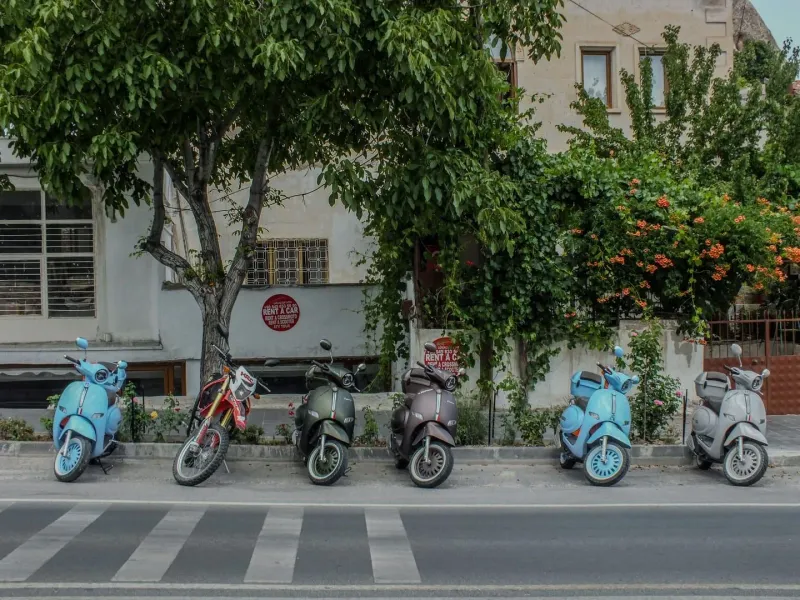
Koh Samui motorbike rental costs 150-450 THB a day. Bring a motorcycle licence plus IDP; leave a passport copy, never the passport. Helmet fine up to 2,000 THB.
Koh Samui motorbike rental costs 150-450 THB a day (~4.50-13 USD), with a 1,000-3,000 THB cash deposit and a passport copy. Thai law requires a home-country motorcycle licence plus an International Driving Permit (IDP) for riders, even though many shops never ask.
Key takeaways
- Home-country motorcycle licence + IDP (motorcycle class) is legally required; a car-only licence or IDP does not cover a scooter.
- Typical rental: 150-450 THB/day (~4.50-13 USD) depending on cc; weekly and monthly rates cut the daily cost by 30-70%.
- Never leave your passport as the deposit: offer a photocopy plus cash instead.
- Many standard travel insurance policies exclude or limit motorbike accidents, and a crash without the right licence can void a claim.
- Helmets are compulsory for rider and passenger: fine up to 2,000 THB (~57 USD) per person since June 2025.
Key facts: IDP + motorcycle licence required · ~150-450 THB/day rental (~4-13 USD) · helmet fine up to 2,000 THB · deposit 1,000-3,000 THB cash + passport copy · fuel ~40 THB/litre (Sep 2026) · Route 4169 ring road ~51 km
Do I Need a Licence to Rent a Scooter in Koh Samui?
Yes: Thai law requires a valid motorcycle licence from your home country plus an International Driving Permit (IDP) carrying the motorcycle category before you ride a rented scooter on Koh Samui. A car-only licence, or an IDP without the motorcycle category, does not authorise you to ride, even though many rental shops still hand over the keys for a passport copy and cash.
Foreign visitors can ride on their home licence plus IDP for up to 90 days per entry (widely reported by rental and licensing services; the US Embassy in Thailand confirms an IDP is required alongside a valid home licence). Long-term residents are expected to convert to a Thai licence. Police checkpoints on the island check the licence and IDP together with the helmet, and riding without the right documents can void a travel insurance claim (see below).
Have only a provisional or learner licence? It does not count: you need a full licence that includes the motorcycle category, and the IDP only translates what your home licence already allows. If you have no motorcycle licence, use Grab, songthaews or a car (see the alternatives section below).
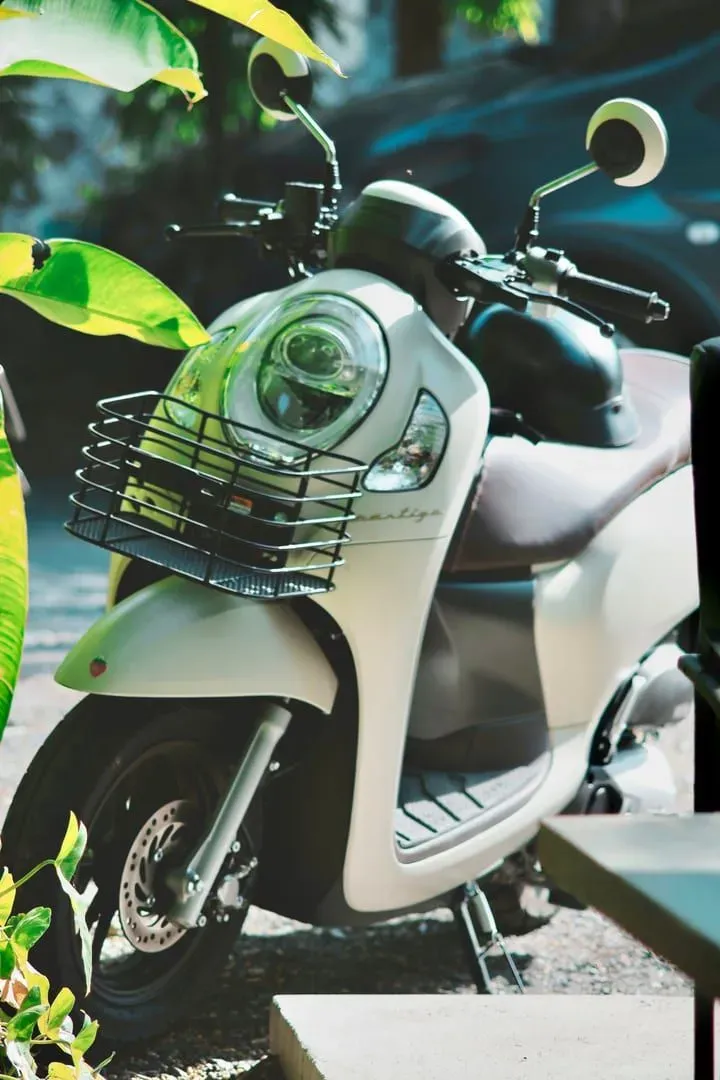
How Do I Get an International Driving Permit (IDP)?
Get the IDP in your home country before you fly, from the national motoring association that issues it, such as AAA in the US or the Post Office in the UK. You need your full home licence, a passport photo, an application form and a small fee (about 20 USD in the US, 5.50 GBP in the UK, per the issuers). Thailand’s Department of Land Transport does not issue IDPs to tourists, so you cannot get one on the island.
Steps that work in most countries:
- Check your home licence includes the motorcycle category (A, M or equivalent). The IDP will not add it.
- Apply to the authorised issuer, in person or by post. Allow a few days to a few weeks for mail orders.
- Make sure the permit lists the motorcycle category. Thailand recognises IDPs under the 1949 Geneva Convention and, since 2020, the 1968 Vienna Convention (The Thaiger, March 2026).
- Carry the IDP and your original licence together: the IDP alone is not valid. It is usually valid for one year from issue.
A provisional licence cannot be converted into an IDP. If your licence has no motorcycle category, a Thai motorcycle test is the only legal route, which is not practical for a short holiday.
What Does a Scooter Rental Cost in Koh Samui?
A scooter rental in Koh Samui costs between 150 THB and 450 THB per day (~13 USD), with the price driven mainly by engine size and rental length. Weekly and monthly rentals bring the effective daily rate down significantly, which matters if you’re staying more than a few days. Ranges below reflect shop price lists and listings seen in September-October 2026; they are approximate.
| Engine size / model | Daily | Weekly | Monthly |
|---|---|---|---|
| Automatic 110-125cc (Honda Scoopy, Wave) | 150-200 THB (~4.50-5.50 USD) | 900-1,200 THB (~26-34 USD) | 2,000-2,500 THB (~57-71 USD) |
| Honda Click 125i | 200-300 THB (~5.50-8.50 USD) | 1,200-1,500 THB (~34-43 USD) | 2,500-3,000 THB (~71-86 USD) |
| Honda PCX 150/160 | 300-450 THB (~8.50-13 USD) | 1,600-1,800 THB (~46-51 USD) | 3,500-4,000 THB (~100-114 USD) |
Chaweng and Lamai sit at the top of these ranges due to demand; Maenam, Bophut, and Nathon tend to be cheaper. On top of the rental fee, most shops ask for a cash deposit of 1,000-3,000 THB (~29-86 USD) plus a photocopy of your passport: never the passport itself (see the next section). Fuel is extra: expect roughly 100-150 THB (~3-4.50 USD) a day riding around the island at pump prices of about 40 THB a litre (Nation Thailand, 24 Sep 2026).
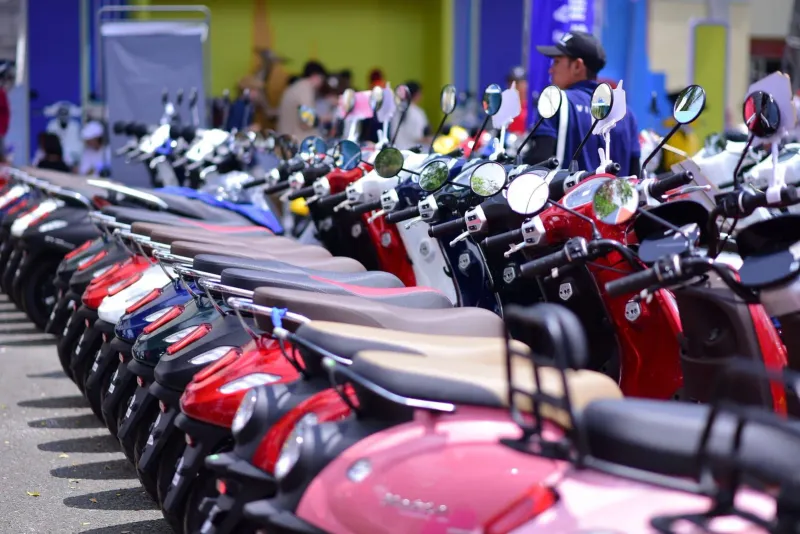
Should I Leave My Passport as a Deposit?
No: never hand over your original passport as a rental deposit; offer a photocopy of the passport data page plus a cash deposit instead, and walk away from any shop that refuses. This is the most common scooter-rental scam in Thailand: once the shop holds your passport, it holds all the power. On return, some operators invent a “scratch” or “damage” fee and refuse to hand the passport back until you pay, and a replacement passport from your embassy typically takes 5-10 working days, a serious problem if you have a flight to catch.
The US Embassy in Thailand and other embassies and travel advisories (UK FCDO, Australian Smartraveller) advise against leaving a passport as rental collateral; check their current pages before you travel. A reasonable shop accepts a passport photocopy, a cash deposit, or a card hold instead. If a shop already holds your passport and won’t return it, contact the Tourist Police on 1155 rather than negotiating alone.
Does Travel Insurance Cover Scooter Accidents?
Often not: many standard travel insurance policies exclude or limit motorbike and scooter accidents, and policies that do cover riding commonly void the claim if you weren’t correctly licensed (home licence plus motorcycle-class IDP) or weren’t wearing a helmet. With real accident risk on the roads (see below), check your policy’s fine print before you rent, as carefully as you check the bike.
Read your policy for the words “motorcycle,” “scooter,” or “moped” in the exclusions: a generic “accidental injury” clause is not the same as motorbike cover. Some specialist providers cover scooters up to 125cc, but they are the exception. If your policy is silent or ambiguous, ask the insurer and get the answer in writing before you ride, not after an accident.
Where to Rent a Scooter in Koh Samui?
You can rent from independent local shops, hotel desks, larger chains or delivery services, and every beach area has them. Chaweng and Lamai have the most shops: heavy footfall keeps daily rates competitive but also attracts a few operators running the passport-deposit scam described above. Maenam and Bophut have fewer shops but tend to offer better weekly and monthly rates, popular with longer-stay visitors and digital nomads.
| Rent from | Price | Contract and cover | Best for |
|---|---|---|---|
| Independent local shop | Lowest, negotiable for a week or more | Often basic or verbal; insist on a written agreement | Short rentals, price-sensitive riders |
| Hotel or resort desk | Slightly higher | Clearer, hotel’s reputation is on the line | Convenience, first-time riders |
| Larger rental chain | Modest premium | Newer bikes, clearer contracts, sometimes basic third-party cover | First ride in Thailand |
| Delivery to your hotel | Similar to shops, delivery sometimes extra | Varies by shop; ask in advance | Skipping the shop visit |
Airport counters exist but are pricier; they only make sense if you need a bike the moment you land. Whichever you pick, compare at least two: rates for the same 125cc automatic can differ by 50-100 THB (~1.50-3 USD) a day between shops on the same street.
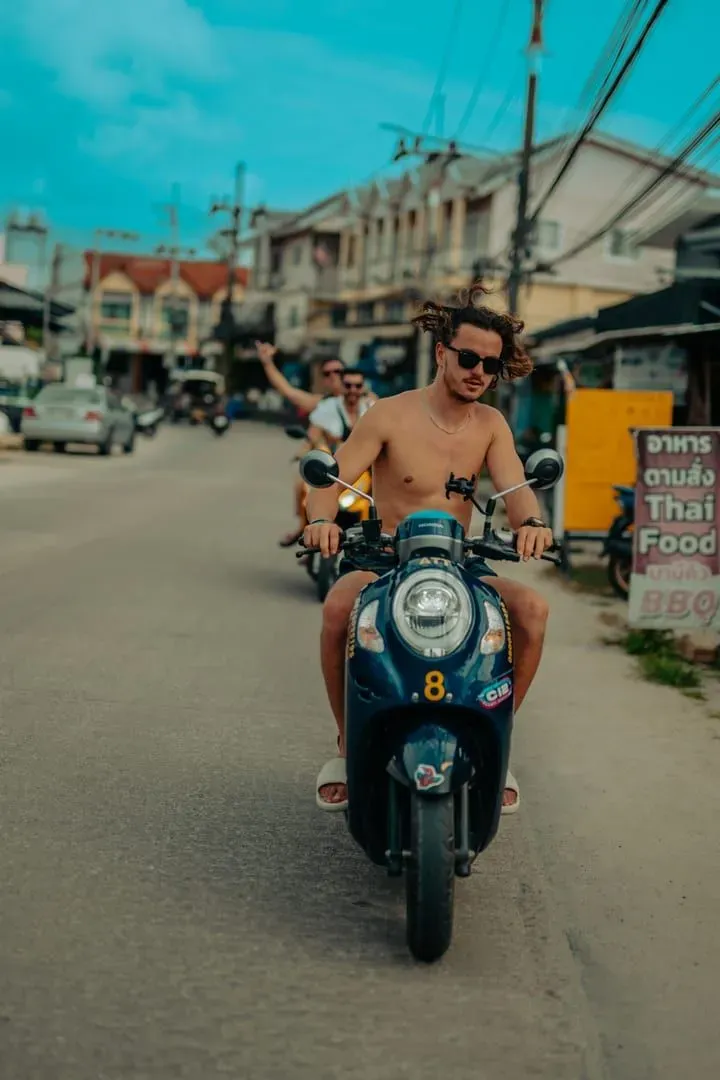
How Do I Choose a Scooter Rental Shop in Koh Samui?
We do not rank or recommend shops: there are dozens, and standards change from season to season. Judge each one on the same checklist instead.
- Deposit policy: a cash deposit and passport photocopy is normal; many shops advertise “no passport deposit” as a selling point, so refusing to hold the passport should never cost you the booking.
- Written contract: it should list the rate, deposit, insurance terms and the bike’s existing damage.
- Bike condition: tyres, brakes, lights and horn working, and a bike that matches the photo.
- Recent reviews: read Google Maps or Tripadvisor reviews from the last few months, including any about damage claims.
- Delivery and pickup: many shops deliver to hotels and collect the bike at the end; ask whether it is free and for which areas.
- Bike choice: 110-125cc automatics are the standard. Some shops also list bigger bikes (one island listing shows up to 750cc), but a larger bike needs more riding experience and is covered by the same licence and IDP rules.
Compare two or three shops by message before you land, then confirm everything again in person before paying.
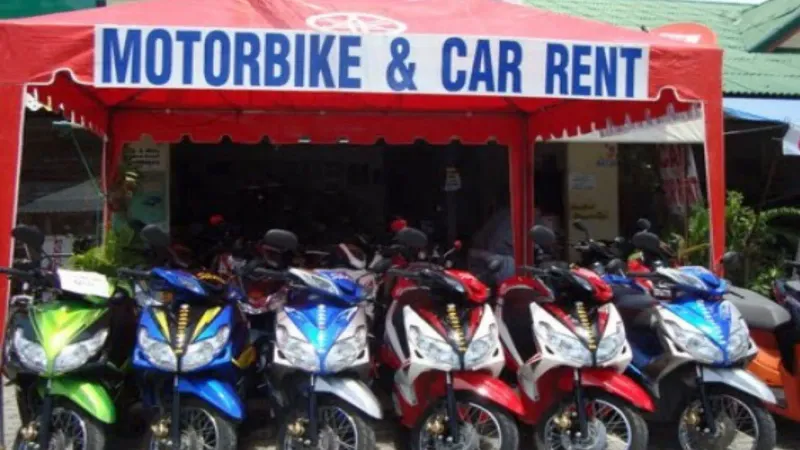
How Dangerous Is Riding a Scooter in Koh Samui?
Riding a scooter on Koh Samui carries real risk, and Thailand’s road toll is among the world’s highest. The WHO’s Global status report on road safety 2023 estimates 18,218 road deaths in Thailand in 2021, about 50 a day, with motorcyclists making up around 84% of them. Island-level figures are not published in a form we can cite, so treat any single Samui number you see with caution.
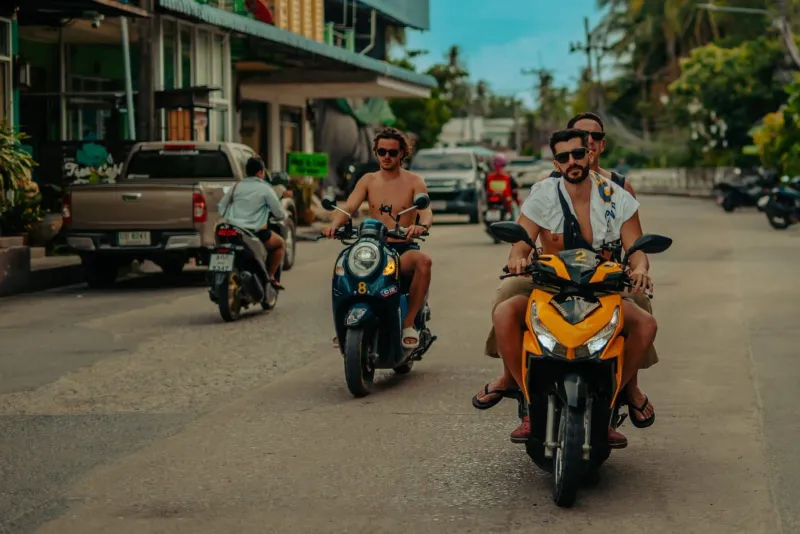
Most serious incidents involve visitors unfamiliar with left-hand traffic (see driving on Koh Samui for road conditions), hilly roads and mixed traffic that includes trucks, songthaews and stray dogs. Holiday periods such as Songkran (mid-April) and New Year bring Thailand’s national road-safety campaigns, extra checkpoints and heavier traffic. None of this means you shouldn’t ride (many visitors rent scooters on Samui without incident), but ride slowly and only if you are genuinely comfortable on two wheels.

What Are the Rules: Helmets, Checkpoints and Fines?
Helmets are legally required for rider and passenger on every Thai road, and since 1 June 2025 the fine is up to 2,000 THB (~57 USD) per unhelmeted person, up from 500 THB. Reports by the Bangkok Post and Nation Thailand (June 2025) say a rider carrying an unhelmeted passenger can face the doubled amount, 4,000 THB (~114 USD). Expect officers to check helmet, licence and IDP in the same stop.
- Fuel: Gasohol 95 runs about 40 THB a litre (Nation Thailand, 24 Sep 2026); roadside pumps and petrol stations are widespread around the ring road.
- Route 4169 hazards: The island’s ~51 km ring road connects every beach town. Riders and locals commonly flag the hill out of Nathon toward Maenam (steep, with truck and multi-vehicle crashes) and the Chaweng-Lamai section (sharp bends, slick within minutes of rain).
- Rain: Wet roads are much more dangerous: reduce speed and increase following distance the moment rain starts, especially where sand has blown onto the road.
- Checkpoints: Carry your original home licence, IDP, and rental agreement; a photocopy alone is not always accepted by police.
How Do I Avoid a Damage Scam?
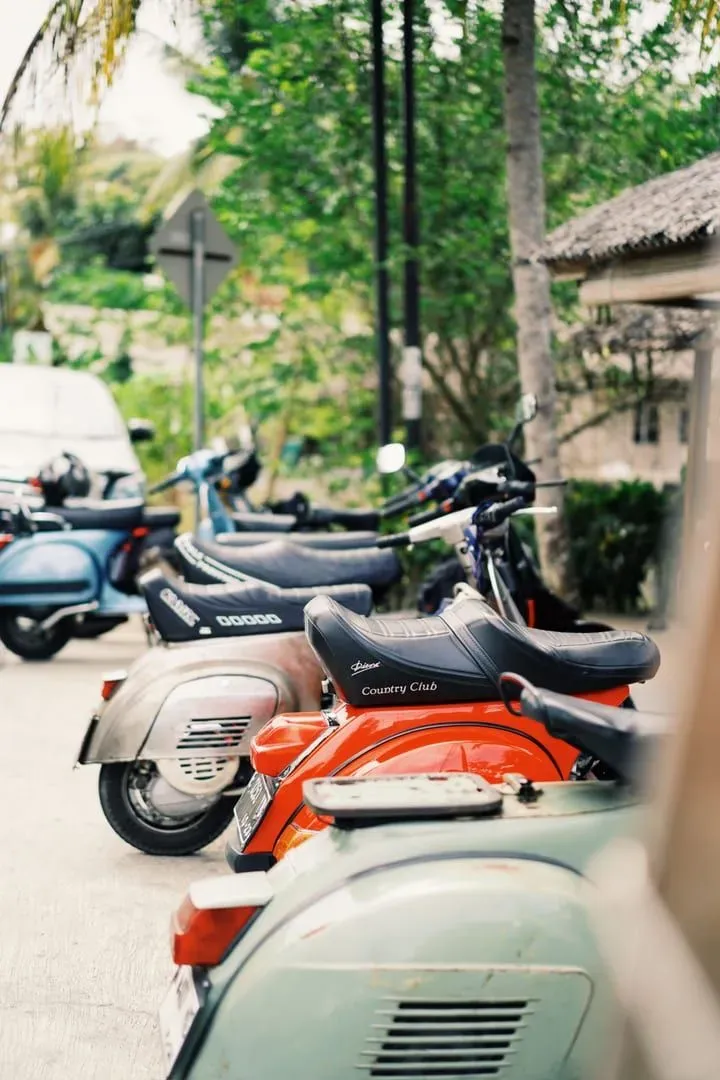
Photograph and video the entire scooter (every panel, both mirrors, the seat, the horn, indicators, and the odometer) before you ride off, with your phone’s timestamp visible, and repeat the walk-around on return before handing back the keys. This is the best defence against the “damage scam,” where a shop claims a pre-existing scratch happened on your rental and demands cash or keeps your deposit (or passport, if you left it).
- Get a written rental agreement listing the bike’s condition, deposit amount, and daily rate: a shop that won’t provide one is a red flag.
- Check the tyres, brakes, lights, and horn actually work before leaving the lot, not after.
- Pay the deposit in cash against a receipt, not by leaving your passport.
- If a dispute happens anyway, call the Tourist Police (1155) before paying a disputed “damage fee”: they can mediate on the spot in many cases.
What Are the Alternatives to Renting a Scooter?
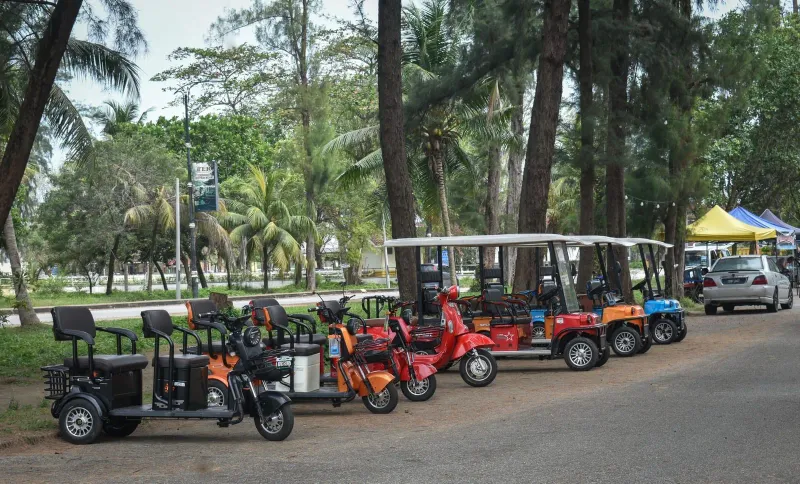
If riding doesn’t appeal after weighing the licence rules and accident risk, Koh Samui has workable alternatives for getting around without one. Grab (the ride-hailing app) covers most of the island at a fixed upfront fare, though it cannot pick up inside the airport terminal. Bicycles are the non-motorised option for flat stretches. Songthaews (shared pickup trucks along Route 4169) cost 50-100 THB (~1.50-3 USD) per hop between beach towns and are the cheapest option for short trips. Car rental costs more (roughly 1,200-1,800 THB/day, ~36-54 USD) but is safer for anyone unsure about mixed Thai traffic, with far better insurance availability than a scooter. If the draw is off-road riding rather than transport, guided ATV tours on private trails need no road licence, though many travel policies still exclude them.

For a single point-to-point trip (Chaweng to the airport, say, or up to the Lamai Viewpoint trailhead), a metered taxi or Grab often works out close to scooter-rental cost once fuel and deposit risk are counted, without the licence or accident exposure. Planning to take your scooter to Koh Phangan? Check ferry rules first in our Koh Samui to Koh Phangan ferry guide.
FAQ
Do you need a license to rent a scooter in Thailand?
Yes. Thai law requires a valid motorcycle licence from your home country plus an International Driving Permit (IDP) with the motorcycle category. Many shops rent without checking, but riding without the correct documents is illegal, risks a police fine, and can void travel insurance if you crash. A provisional licence does not qualify.
How do I get an IDP for Thailand?
Apply to your home country’s authorised motoring association (AAA in the US, the Post Office in the UK) before you travel, with your full licence, a photo and a small fee. The IDP only works alongside your original licence and covers only the categories on it, so you need a motorcycle category at home.
How much does scooter rental cost in Koh Samui?
Expect 150-250 THB/day (~4.50-7 USD) for a basic 110-125cc automatic, and 300-450 THB/day (~8.50-13 USD) for a 150-160cc model like the Honda PCX. Weekly and monthly rates cut the effective daily cost by 30-70%. Add a 1,000-3,000 THB (~29-86 USD) cash deposit and roughly 100-150 THB/day in fuel.
How much does it cost to rent a motorbike in Koh Samui for a month?
Monthly rates run roughly 2,000-2,500 THB (~57-71 USD) for a 110-125cc automatic, 2,500-3,000 THB (~71-86 USD) for a Honda Click, and 3,500-4,000 THB (~100-114 USD) for a PCX, plus fuel and a deposit. Prices are approximate as of autumn 2026 and vary by area and season.
What is the helmet fine in Thailand?
Up to 2,000 THB (~57 USD) per unhelmeted rider or passenger since 1 June 2025, up from 500 THB. Press reports say a rider carrying an unhelmeted passenger can be charged double, 4,000 THB (~114 USD). Checkpoints on Koh Samui check helmet, licence and IDP in the same stop.
Should I leave my passport as a deposit for a scooter?
No. Offer a passport photocopy plus a cash deposit (1,000-3,000 THB) instead. Holding your passport lets a dishonest shop invent a damage fee later, and a replacement from your embassy can take 5-10 working days. Reputable shops accept a copy without objection. If you would rather not ride, a Grab, songthaew or car covers the island, and our itinerary guide has day plans to pair with it.
Published Updated Facts checked