Freediving Koh Samui: one dedicated school, 2-3 day courses from 7,500 THB, dives at Sail Rock and Koh Tao, plus the safety rules that aren't optional.
Freediving on Koh Samui means breath-hold courses run by one dedicated school, Freediving Koh Samui (Apnea Total certified), with a 2-day Discovery course at 7,500 THB (~214 USD) and 3-day Beginner and Advanced courses at 9,500-12,000 THB. Training dives happen from a boat at Sail Rock and around Koh Tao, because Samui has no shore-entry depth training. Koh Tao also has the region’s biggest freediving community. Every level rests on one rule: never freedive alone.
Key takeaways
- Freediving Koh Samui lists Discovery (2 days, 7,500 THB), Beginner Level 1 (3 days, 9,500 THB) and Advanced Level 2 (3 days, 12,000 THB), max 3 students per instructor (school’s own site, Oct 2026).
- The school’s site also shows a notice that it is currently offering private charters only (40,000 THB per boat per day): confirm group dates before you plan around them.
- Dives run at Sail Rock, about 1-1.5 hours by boat depending on the boat, and Koh Tao; the school’s Samui base is used for theory.
- AIDA’s ladder runs from a 1-day introduction (10m) to AIDA 2 (12-20m, minimum 2.5 days) and AIDA 3 (24-30m); Molchanovs uses a similar four-stage Wave ladder.
- Shallow water blackout, not exhaustion, kills trained freedivers. Never freedive alone, never hyperventilate, and use one-up-one-down with a trained buddy every time.
- Standard travel insurance commonly excludes freediving beyond your certified depth, solo diving and apnea training: read the wording before you fly.
What Freediving on Koh Samui Actually Is
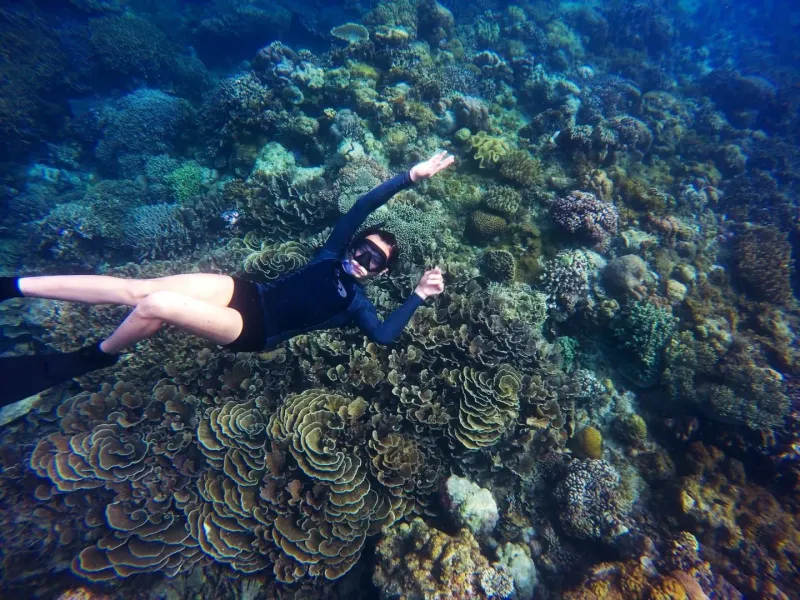
Freediving is diving on a single breath, with no tank: a different discipline from the scuba diving covered in Diving from Koh Samui, with a different risk profile. Scuba lets you sit at depth and breathe; freediving is built around how long and how deep you can go on one lungful of air, which is why its safety culture is so strict. The core disciplines are constant weight (down and back on a weighted line, no weight drops), static apnea (a timed breath-hold, floating still), and dynamic apnea (a horizontal underwater swim). Recreational courses certify mostly constant weight and static, and that is what Gulf conditions support. Freediving shares gear with snorkeling (mask, long fins, sometimes a wetsuit) covered in Snorkeling on Koh Samui; the discipline and training do not overlap.
Who’s In It
The freediving community on Samui is small, a handful of regulars rather than a fixed club. Samui has one dedicated freediving school, which runs small groups of up to 3 students per instructor, and many local freedivers also train on Koh Tao, which has more schools, lower prices and shore-entry training. What holds the group together is the buddy system: freediving cannot be practised solo, so pairs and small trios who trust each other’s rescue skills dive together every session. New arrivals usually get folded in through a course or a pointer from someone already certified, not an advertised club night.
The Course Ladders
Two certification families cover almost every freediver you will meet in the Gulf: AIDA International, and Molchanovs, which is commonly taught alongside SSI’s own freediving levels. Samui’s dedicated school teaches Apnea Total courses, which it describes as comparable to AIDA, SSI and PADI levels (its Level 1 is listed as equivalent to AIDA 2). Ladders require the level below before you move up.
| Level | AIDA (depth / static / dynamic) | Molchanovs Wave equivalent |
|---|---|---|
| 1 | Introduction: to 10m / 1’30” / 25m | Wave 1: pool skills, first open-water dives |
| 2 | 12-20m / 2’00” / 40m | Wave 2: roughly 16-20m constant weight |
| 3 | 24-30m / 2’45” / 55m | Wave 3: roughly 30-32m constant weight |
| 4 | Master: deeper than 30m | Wave 4: roughly 40m constant weight |
Exact depth and time minimums shift slightly between agencies and get revised, so treat the table as the shape of the ladder: confirm current standards with whichever school you book. AIDA 1 is a one-day introduction; AIDA 2 is the first full certification and runs a minimum of 2.5 days. A 2-day Discovery course is an introduction rather than a full certificate, and a 3-day Beginner course is the usual route to a first certification. Day one is typically theory (physiology, equalization, blackout and rescue) plus confined-water breath-hold and finning drills; open-water days work down in stages toward roughly 15-20m under direct supervision. Nobody is certified to dive alone at the end: the certification is a starting depth limit with a buddy, not a solo licence.
What a Freediving Course Costs on Koh Samui
A beginner freediving course on Koh Samui costs about 7,500-9,500 THB (~214-271 USD) as of October 2026, based on Freediving Koh Samui’s own price list. Equipment rental, certification, boat transfers and emergency oxygen are included, and private options cost more.
| Option | Duration | Price (THB) | Notes |
|---|---|---|---|
| Discovery freediving | 2 days | 7,500 | Introduction, group of up to 3 |
| Beginner Level 1 | 3 days | 9,500 | Reaches about 15-20m |
| Advanced Level 2 | 3 days | 12,000 | Group of up to 3 |
| Fun dive (certified) | half day | 4,500 per person | Sail Rock or Koh Tao |
Private one-on-one courses start from about 12,000 THB and a private duo from about 14,000 THB. Koh Tao schools are generally cheaper per course and the Koh Tao packages combine courses with accommodation: Ban’s Diving Resort, for example, lists a 4-night learn-freediving package at about 13,150 THB. Operator price lists change, so check the current one. A decent mask and long fins are worth owning past the beginner course, since fit affects both comfort and equalization.
Where to Take a Freediving Course on Koh Samui
Book through the school directly: Freediving Koh Samui (instructor Diego Pauel, Apnea Total certified, first aid and oxygen certified) lists its courses on its own site, with a Monday to Wednesday weekly schedule, fun dives Tuesday and Wednesday at Sail Rock and Thursday at Koh Tao. Its notice shows that private charters are the current offering, so message or call the school to confirm the next group course before you commit to dates. Some other dive operators on Samui sell PADI Freediver courses through booking platforms; check the operator, the instructor to student ratio and what is included, as you would for any course.
If group dates do not fit, the alternative is a beginner course on Koh Tao, a ferry ride away from Samui (Koh Samui to Koh Tao), where new groups start most days. Bring the certification back and keep training with a buddy, since the buddy rule applies after the course as much as during it. For logistics at the other end of that trip see the Koh Tao and Nang Yuan day trip guide.
Where People Train: Sail Rock, Koh Tao and the Gulf’s Conditions
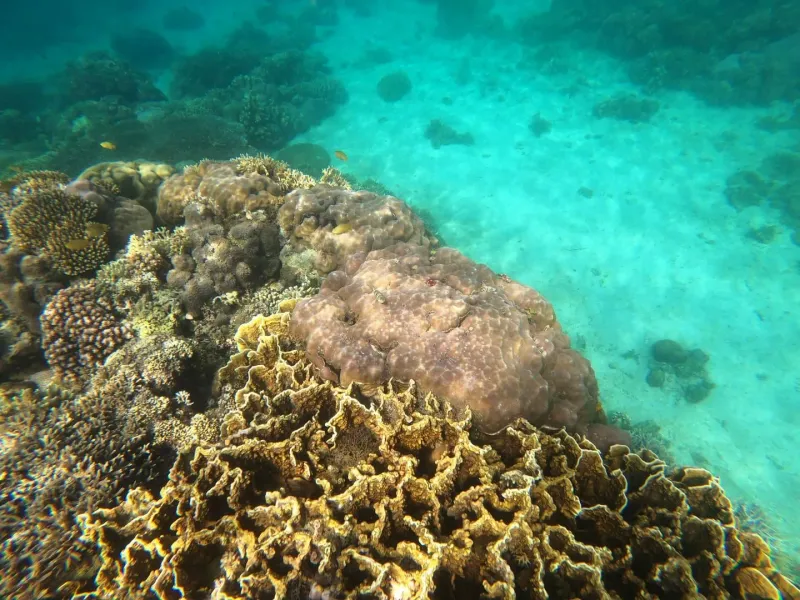
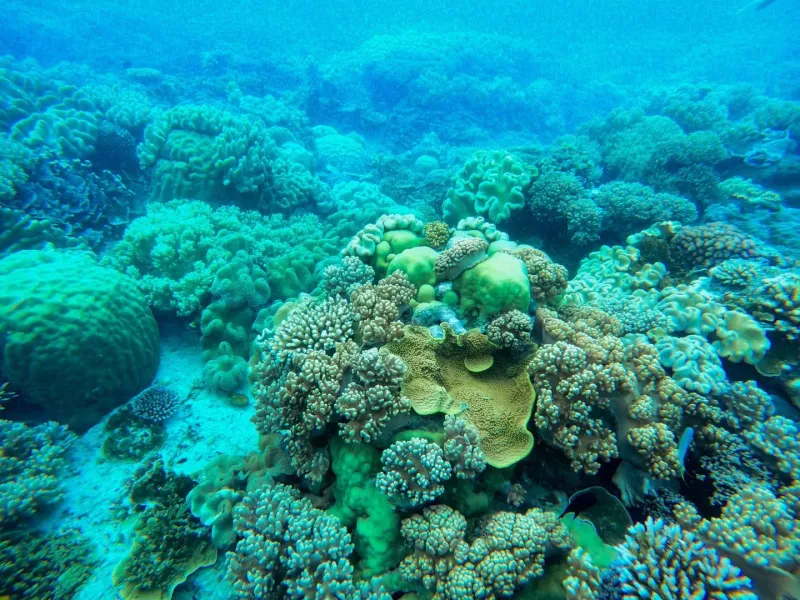
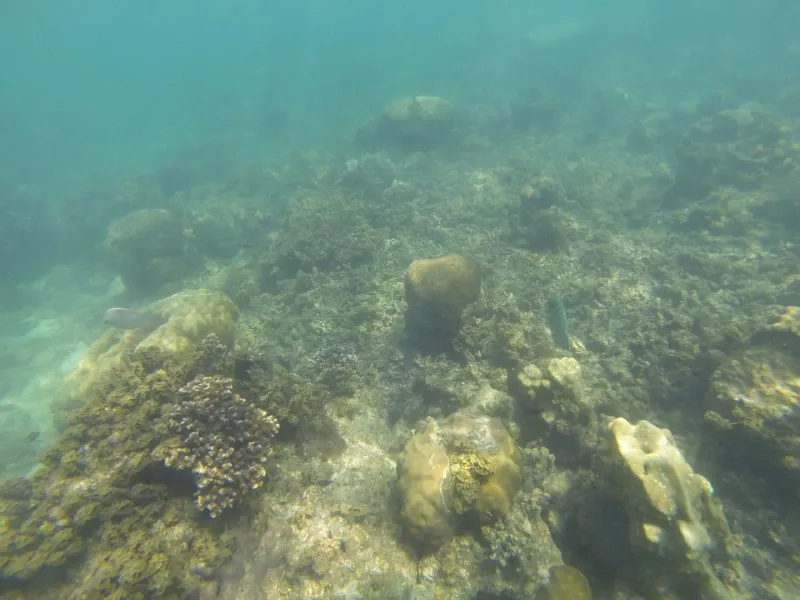
Serious constant-weight training on Samui means a boat, because the Gulf seabed shelves gradually rather than dropping into a wall close to shore, and the dedicated school lists no shore-entry depth training. Water sits around 28-29°C year-round, so a thin 3mm wetsuit is usually enough, and school-reported visibility runs about 10-20m or more depending on the day.
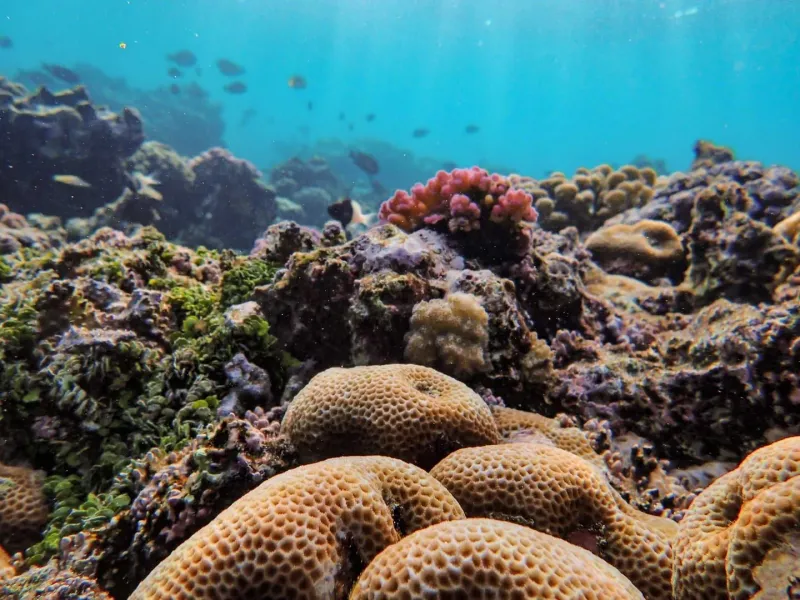
Between boat days, certified freedivers keep their finning and relaxation in shape over the shallow reefs at Silver Beach and Coral Cove, with a buddy watching from the surface and no depth work.
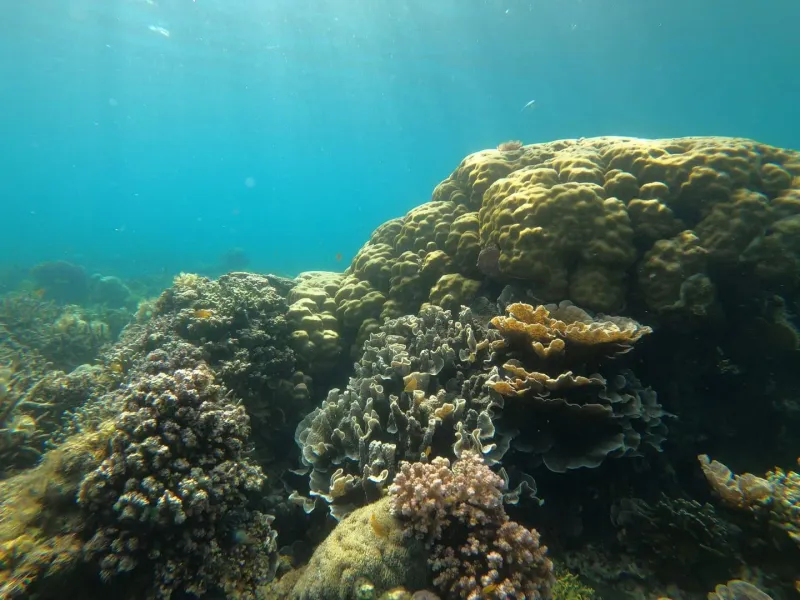
Sail Rock (Hin Bai) is the main site: a submerged pinnacle with a base around 40m, a surface peak and a vertical chimney, about 1-1.5 hours by boat from Samui (sources give about 50 minutes by speedboat to 90 minutes). Dive centres also run it for scuba; see diving from Koh Samui. Koh Tao sites such as Japanese Gardens and the White Rock reefs are used for fun dives and courses. Visibility follows the same pattern as diving and snorkeling here: clearest roughly March to September, murkier October to December when the north-east monsoon churns the water, which is also when boat days get cancelled most, although the school describes freediving as viable year-round.
Never Freedive Alone: the Rules That Aren’t Optional
Shallow water blackout is the reason freediving’s safety rules read as absolute rather than advisory, and it is not a beginner’s mistake: it kills experienced, fit freedivers on easy dives they have done a hundred times, usually in the last few metres of the ascent or just after surfacing, with no warning the diver can feel. The rules exist because blackout gives you no symptoms to react to:
- Never freedive alone. Not a shallow dip, not a “quick static” in the pool. Blackout can happen in 1.5m of water as easily as at 20m, and an unsupervised freediver who blacks out drowns.
- Never hyperventilate before a dive. Rapid pre-breathing lowers CO2 without raising usable oxygen, which strips out the warning urge to breathe and makes blackout more likely, not less: this is standard on every course syllabus, not a matter of personal technique.
- Dive one-up-one-down with a trained buddy, meaning one person dives while the other watches from the surface, ready to swim down and recover them: never two people diving at once with nobody watching.
- Supervise the whole surface interval, not just the dive itself. Most blackouts show up in the 10-15 seconds after surfacing, which is exactly when an untrained buddy relaxes and looks away.
- Never freedive after scuba diving on the same day. Residual nitrogen from a scuba dive raises decompression sickness risk on a subsequent breath-hold dive; agencies and dive doctors both treat this as a hard no, not a guideline to weigh against convenience.
A certification course is where you actually learn rescue: how to recognize the loss of motor control that precedes blackout, how to bring an unconscious diver to the surface and clear their airway, and how to manage a recovering diver who often does not remember losing consciousness. None of that is intuitive, and none of it is something to skip to save two days and a course fee: an uncertified freediver going deeper “because it looks easy on video” is the exact profile blackout statistics describe.
What Travel Insurance Won’t Cover
Most standard travel insurance treats freediving as a listed hazardous activity with conditions attached, not a blanket exclusion, but the conditions catch people constantly. Commonly excluded: diving or breath-holding beyond your certified depth, freediving without a buddy, and apnea training itself unless the policy explicitly names freediving or “breath-hold diving” (a scuba-only policy does not automatically cover it). Some policies also cap covered depth at a flat number, often 30m, regardless of certification. None of this shows up until a claim is filed, so read the activities list and depth limits before booking a course, not after.
FAQ
Is there freediving on Koh Samui?
Yes. Freediving Koh Samui, an Apnea Total certified school, runs small-group courses (up to 3 students) with dives at Sail Rock and Koh Tao, and a few other dive operators list freediver courses on booking sites. Its site currently shows a private-charters-only notice, so confirm group dates first.
How much does a freediving course cost on Koh Samui?
About 7,500 THB (~214 USD) for a 2-day Discovery course, 9,500 THB (~271 USD) for a 3-day Beginner Level 1 and 12,000 THB (~343 USD) for Advanced Level 2 on the dedicated school’s price list as of October 2026. Equipment, certification, boat transfers and emergency oxygen are included.
Is freediving dangerous on Koh Samui?
Freediving carries real risk anywhere, mainly from shallow water blackout, but that risk concentrates in solo diving, hyperventilation and diving beyond your certified depth. Certified freedivers following one-up-one-down with a supervised surface interval face a much lower risk: the safety record depends entirely on those rules being followed.
How deep can a beginner go after a short course?
A beginner course typically reaches about 15-20m with the school’s Level 1, and AIDA 2 certifies constant-weight dives to a 12-20m range, always with a trained buddy present. That is a starting depth limit tied to supervised diving, not a licence to freedive alone at that depth.
Is a freediving course worth it?
Yes if you want to dive safely beyond snorkel depth: the course teaches equalization, breath-hold technique and, above all, rescue, which you cannot learn from video. Even a 2-day Discovery course gives you the supervised basics. Self-teaching is where blackout accidents come from.
When is the best time for freediving on Koh Samui?
Roughly March to September has the clearest and calmest water. October to December is murkier because the north-east monsoon churns the sea and boat days get cancelled most, though the school says freediving is viable year-round.
Should I learn freediving or scuba diving first?
They are separate skills with separate certifications; neither is a prerequisite for the other. The one firm rule connecting them: never freedive the same day you have scuba dived, since residual nitrogen raises decompression sickness risk on a later breath-hold dive.
What does travel insurance actually exclude for freediving?
Commonly: diving beyond your certified depth, solo freediving, and apnea training that is not explicitly named on the policy: a scuba-only policy usually does not cover freediving. Some policies cap the covered depth at a flat limit around 30m regardless of certification. Check the activities list before booking a course.
What is shallow water blackout?
Shallow water blackout is a loss of consciousness from oxygen deprivation, usually striking in the last few metres of ascent or just after surfacing, with no warning symptoms the diver can feel. It is the reason freediving’s core rules (never alone, no hyperventilation, one-up-one-down, watch the whole surface interval) are treated as absolute.
Turning Up
Check the school’s current schedule first: group courses run early in the week (Monday to Wednesday per its site), and the notice about private charters means dates are worth confirming by message. Come certified to book fun dives, or start with the 2-day Discovery course. If the dates do not line up, a beginner course on Koh Tao is the fallback, and either way the buddy and the supervision are not optional: that is true on day one of a beginner course and on every dive after it.
Published Updated Facts checked